
Many successful short-term rental investors in Charlotte see their STR occupancy rate stall around 70-75%. This is often a sign of a well-managed property hitting a "soft ceiling" where the default settings and reactive strategies that got them there are no longer enough to push them to the top of the market. Breaking past this plateau requires a proactive, data-driven approach to pricing, channel management, and listing optimization.
As the founder of Stayvanah, a boutique STR co-hosting company in Charlotte, and a licensed North Carolina real estate agent with HBMC Residential Group, I, Hemang Bhatt, have helped numerous owners diagnose and overcome this exact challenge. The truth is, that last 10-15% of potential occupancy and revenue doesn't come from working harder; it comes from working smarter and leveraging professional tools and tactics.
Why 70% Occupancy Isn't the Goal
An STR occupancy rate of 70% feels good, but it can be a misleading metric. Occupancy without rate integrity is just "busy work." If you achieve 95% occupancy by slashing rates, your Gross Operating Profit (GOP) might be lower than an operator at 75% occupancy with a much higher Average Daily Rate (ADR). The real goal is maximizing Revenue Per Available Night (RevPAR), which balances both occupancy and rate. A high occupancy rate is only valuable if it’s achieved at the right price.
For many owners in competitive markets like Charlotte, from Uptown to Plaza Midwood, the 70% mark represents the point where "set it and forget it" strategies fail. Your property is likely performing well, but it’s leaving significant money on the table. The strategies that break you past this involve a granular focus on how, where, and for how much you are selling your nights.
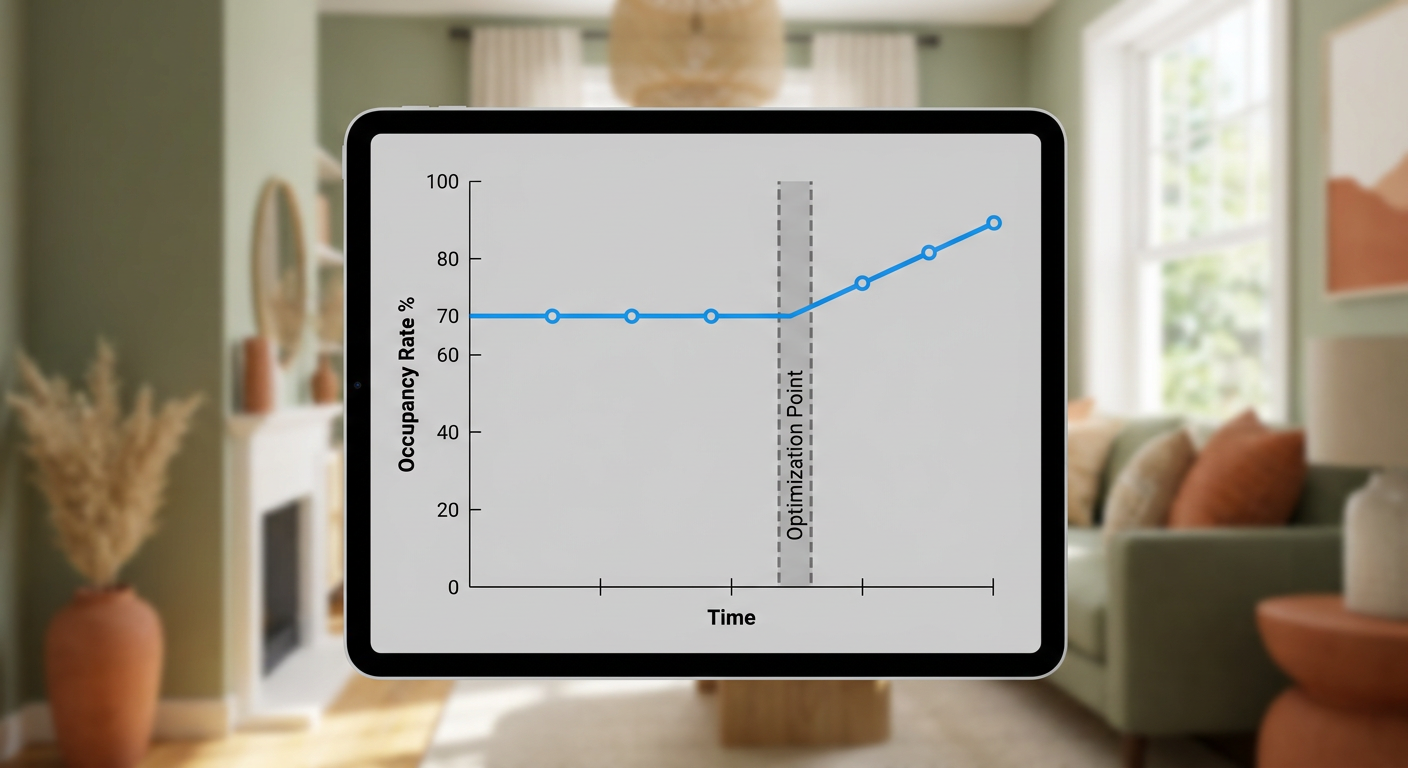
The Three Levers to Break the Occupancy Plateau
Pushing your STR occupancy rate beyond the average requires pulling three levers simultaneously: Dynamic Pricing, Channel Diversification, and Listing Health.
1. Proactive, Hyper-Dynamic Pricing
Most STRs plateau because their pricing strategy is reactive. They use Airbnb's Smart Pricing or a basic PriceLabs setup with default settings, which are designed to secure bookings, but not necessarily at the highest possible price. To break past 70%, your pricing must become proactive and far more granular.
- Beyond Base Rates: Instead of just a base rate, a weekend differential, and some holiday bumps, a professional strategy involves day-of-week adjustments, far-future premiums, close-in discounts, and orphan gap rules. We analyze event calendars for the Spectrum Center, Bank of America Stadium, and local festivals, creating manual overrides weeks or months in advance to capture peak demand.
- Comp Set Analysis: Are you tracking the right competitors? A true comp set isn't just every 2-bedroom in South End. It’s a curated list of 5-10 properties with similar amenities, guest capacity, and review scores. We monitor their calendars daily to see when they book and at what price, allowing us to position our listings just ahead of the curve.
- Pacing and Seasonality: Tools like AirDNA and PriceLabs provide invaluable data on market-wide pacing. We look at booking lead times and seasonal demand curves for specific Charlotte neighborhoods. For example, demand in Dilworth might have a different seasonal pattern than in NoDa. By understanding how quickly the market is booking up for a future date, we know when to hold our rates firm and when to adjust to capture a booking.
2. Multi-Channel Distribution
Relying solely on Airbnb is the single biggest factor limiting STR growth. While it's the 800-pound gorilla, a multi-channel strategy is non-negotiable for maximizing occupancy and revenue.
- The Airbnb + VRBO Foundation: At a minimum, every STR should be listed on both Airbnb and VRBO. They attract different traveler demographics. VRBO, for instance, often draws families and group travelers planning longer stays further in advance.
- Direct Booking Engine: The ultimate goal is a branded direct booking website. This not only saves you the 3% platform fee but, more importantly, it allows you to build a direct relationship with guests for re-marketing. It’s a crucial tool for securing high-value repeat visitors, especially business travelers or those with recurring needs in Charlotte.
- Mid-Term Rental (MTR) Channels: To fill seasonal gaps or weekday lulls, listing on platforms like Furnished Finder is essential. This attracts traveling nurses, corporate relocations, and project-based workers seeking 30-90 day stays. These MTR bookings provide a stable revenue base during slower periods, lifting your overall occupancy and reducing the pressure to discount nights on the primary STR platforms.
At Stayvanah, we deliver our services as co-hosts. This is a crucial distinction from traditional "Charlotte short-term rental property management." As a co-host, you, the owner, keep the title, the listing, and the direct payouts. We are partners in optimizing your asset, not a management company that takes control. Learn more about our co-hosting services.
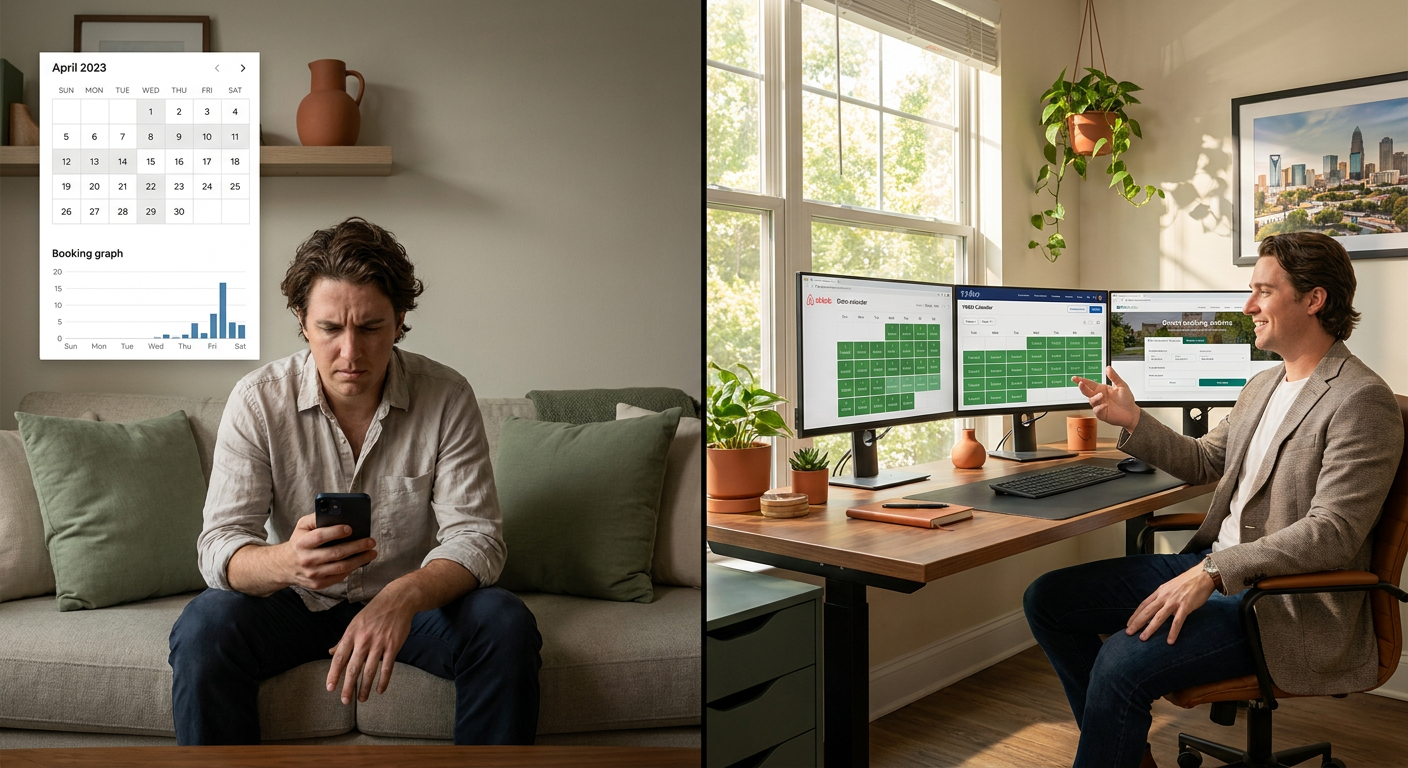
3. Obsessive Listing Health Management
Your listing is not a static brochure; it's a dynamic digital storefront that requires constant maintenance and optimization. The algorithms on Airbnb and VRBO reward active, high-performing listings with better search placement, which directly impacts your STR occupancy rate.
- Review Velocity and Quality: It’s not enough to have a 4.9-star rating. You need a steady stream of positive reviews. We have a systematic process to encourage every guest to leave a 5-star review and provide private feedback for any issues. This constant flow of recent, positive reviews signals to the algorithm that your listing is a top choice.
- Photo & Copy Refreshes: Photos are your #1 selling tool. We recommend a professional photoshoot at launch, followed by seasonal refreshes. A photo showing the fall colors in Elizabeth or a summer evening on the patio in Optimist Park helps guests envision themselves in the space. We also constantly tweak titles and descriptions to A/B test what resonates with travelers looking for specific experiences in Charlotte.
- Lower-Funnel Metrics: The platforms track everything: inquiry response time, booking acceptance rate, and clicks from search results. Maintaining near-instantaneous response times (our goal is <5 minutes, 24/7) and a 100% acceptance rate are critical "ranking factors" that many self-managing owners let slip.
By systematically addressing these three areas, breaking past the 70% STR occupancy rate isn't just possible—it's repeatable. It requires shifting from a passive owner mindset to a proactive asset management approach.
Frequently Asked Questions
### What is a good STR occupancy rate in Charlotte?
A good STR occupancy rate in Charlotte, NC, typically falls between 75% and 85% for a well-managed property. While city-wide averages reported by sources like AirDNA might be lower (60-70%), top-performing listings in desirable neighborhoods like South End, NoDa, and Plaza Midwood consistently achieve higher occupancy through dynamic pricing and professional management.
### How can I increase my Airbnb occupancy rate?
To increase your Airbnb occupancy rate, you should implement a multi-channel strategy (listing on VRBO and direct booking sites), utilize a dynamic pricing tool like PriceLabs, regularly update your photos and listing copy, and actively manage your listing to maintain a high search ranking. Simply being on Airbnb is not enough; you must optimize for its algorithm by ensuring fast response times, high review velocity, and competitive pricing.
### Is a 100% occupancy rate for my STR good?
No, a 100% occupancy rate for your STR is usually a red flag that your prices are too low. While it seems ideal, it means you likely left money on the table by selling out dates too quickly at a sub-market rate. The goal is to maximize revenue (RevPAR), not just occupancy. A better target is 85-90% occupancy, which indicates you are capturing maximum demand without under-pricing your property.
### What is the difference between co-hosting and property management?
The main difference is that with co-hosting, the owner remains in control. Stayvanah provides Charlotte short-term rental property management as a co-host, meaning you keep the property title, the Airbnb/VRBO listing in your name, and all booking payouts are sent directly to you. We are your operating partner, managing everything from pricing to guest services for a transparent flat fee. Traditional property managers often require long-term contracts, take control of the listing, and payouts flow through them, creating less transparency for the owner.
### How do I find a good real estate agent for buying an STR in Charlotte?
To find a good real estate agent for buying a short-term rental in Charlotte, you need someone who is not just a licensed agent but also an active STR operator and investor. Look for an agent who understands the specific regulations in the Charlotte UDO, knows neighborhood-specific performance data, and can connect you with an STR-friendly ecosystem of vendors. As an agent with HBMC Residential Group and an STR operator myself, I specialize in helping investors identify and acquire profitable rental properties. You can learn more at hbmcre.com/charlotte-str-realtor/.
Written by Hemang Bhatt, Charlotte STR realtor and founder of Stayvanah — licensed North Carolina real estate agent with eXp Realty.
Ready to take the next step?
If you own a Charlotte-area property — or you're considering buying one — Stayvanah can give you a real-numbers picture of what it would earn as a short-term rental. We deliver Charlotte short-term rental property management as co-hosting: you keep the title, the listing, and the payouts.
👉 Get your free earnings estimate
Prefer to talk it through? Schedule a call with Hemang — founder of Stayvanah and a licensed NC real estate agent specializing in STR.